Golf for Beginners: Complete Guide to Equipment, Rules, and First Steps in 2026
Golf might look complicated, but honestly, starting out is way easier than most people think. You don't need to be an athlete or spend a fortune on gear to get into it.
With just some basic equipment, a few key skills, and a sense of course etiquette, you can walk onto a golf course and start playing pretty quickly.
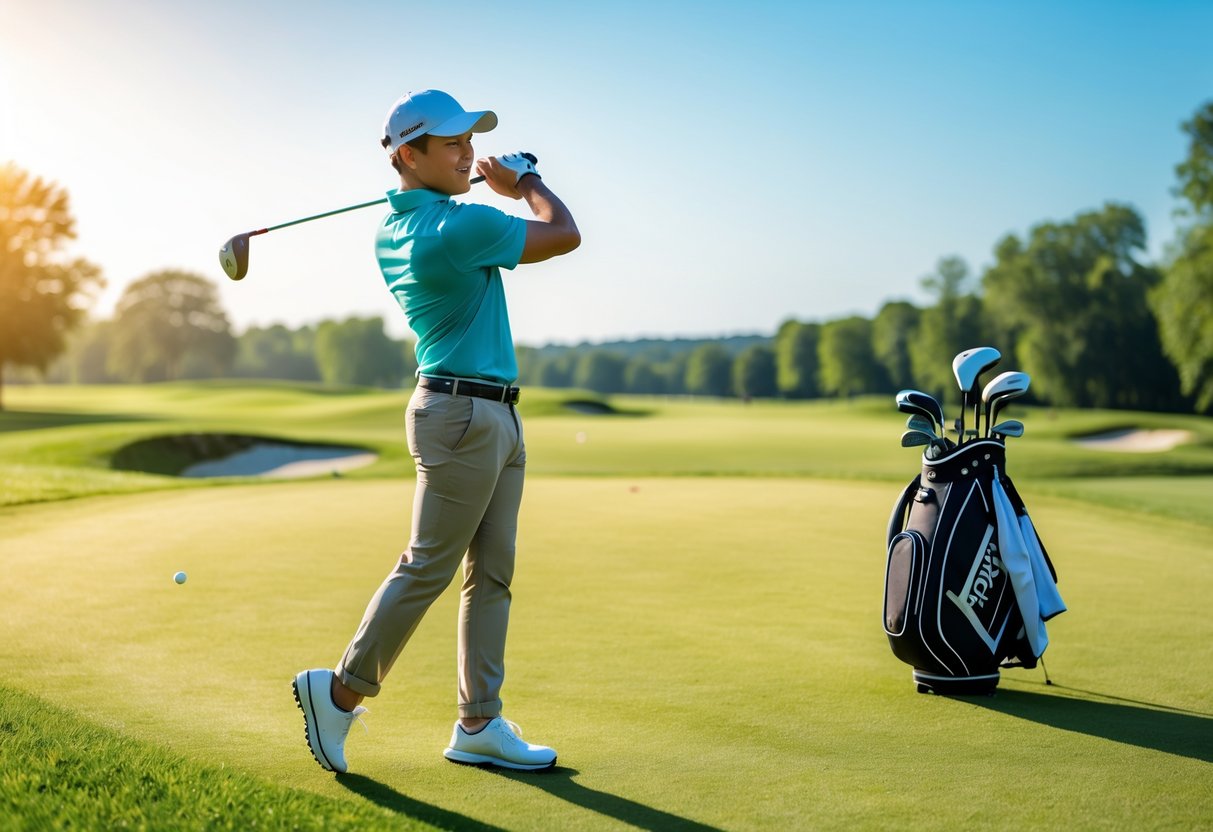
We put this guide together to help you get started as a beginner in 2026. You'll figure out which clubs to pick up, how to build a decent swing, what rules actually matter, and how to practice without wasting time.
We'll also point out the classic mistakes that trip up most new golfers. Whether you're just looking to play with friends or maybe get a bit more competitive, this guide should give you a good head start.
Let's get you ready for your first round. Why wait?
Key Takeaways
- You really just need a basic set of clubs, golf balls, tees, and the right clothes to start golfing.
- Getting grip, stance, and swing basics down early helps you improve faster and keeps bad habits at bay.
- Knowing the main rules and some etiquette lets you play with confidence and respect for others on the course.
Golf Equipment Essentials for Beginners
Getting started in golf doesn't mean you need to empty your wallet or buy everything at the pro shop. You just need a few essentials to play your first rounds comfortably and legally.
Choosing Your First Set of Clubs
Try starting with 7-10 clubs instead of the full 14. Fewer clubs make it easier to learn what each one does.
A basic starter set usually includes:
- Driver for tee shots
- 3-wood or 5-wood for fairway shots
- 5-iron through 9-iron for approaches
- Pitching wedge for shorter shots
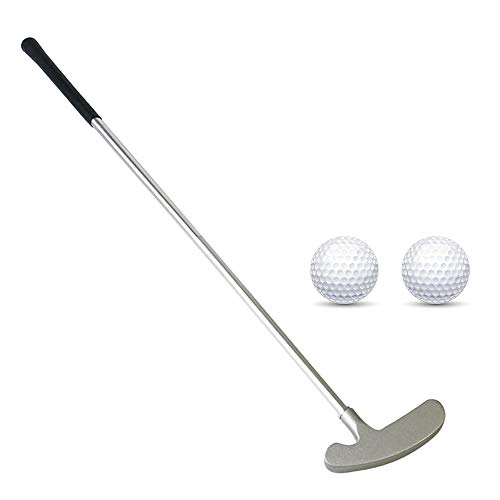
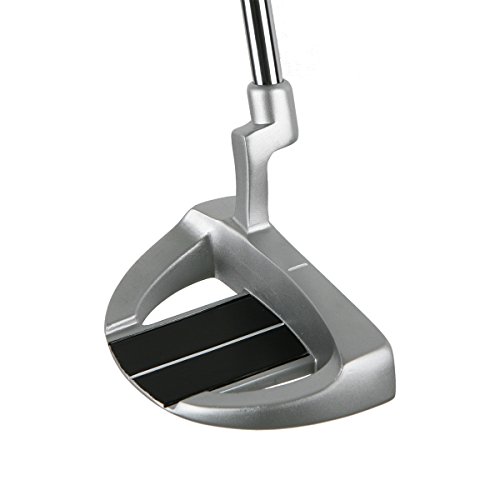
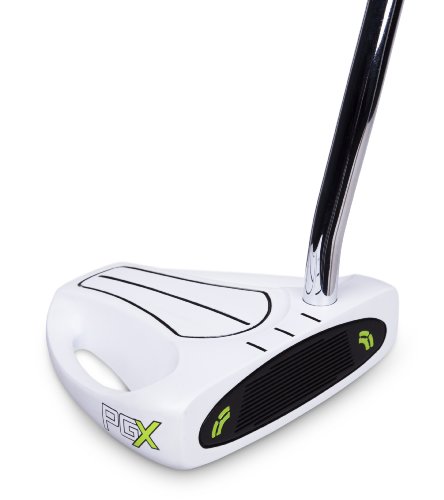
- Putter for the green
Used clubs or last year's models work well for beginners. Your swing will change a lot at first, so there's no point dropping big money on new gear yet.
Look for clubs labeled "game improvement" or "forgiving." A larger club face helps soften the blow of off-center hits—always a plus.
Must-Have Accessories for New Golfers
Besides clubs, you'll want a few other basics in your bag. Golf gloves help prevent blisters and provide a better grip, and most people wear one on their lead hand.
Golf shoes with soft spikes make a real difference for stability. Athletic shoes work for your first couple of rounds, but golf shoes start to matter as you swing harder.
A golf bag keeps your gear together. Cart bags are good if you always ride, while stand bags are lighter and have legs if you plan to walk.
Other essentials? Think:
- Ball markers and a divot tool
- Towel for cleaning clubs
- Water bottle
- Sunscreen and a hat
- Rain gear if the forecast looks sketchy
Renting vs. Buying Golf Gear
Renting clubs usually runs $30-50 per round at most courses. It's a smart move if you're just testing the waters or play once in a blue moon.
Try renting for your first couple rounds. That way, you can decide if golf's your thing before you start spending on equipment.
Once you've played 5-6 rounds, buying a beginner set (typically $200-400) becomes financially viable.
Think about:
- How often you actually play
- Your budget
- Storage space for clubs
- Whether local courses have decent rental gear
Selecting the Right Golf Balls and Tees
Start with inexpensive multi-packs of golf balls. You'll lose plenty, so there's no reason to splurge on the fancy stuff yet.
Two-piece balls with tough covers are best for beginners. They fly straighter and last longer—expect to pay about $15-25 for a dozen.
Wooden or plastic tees are just a couple of bucks per bag. We like 2.75-inch tees for drivers and 1.5-inch for irons.
Buy tees in bulk. You'll break or lose a bunch every round, so keep a good stash handy.
Fundamental Golf Skills to Master

Learning golf really comes down to a handful of basics: how you hold the club, how you stand, how the club moves, and how you hit the ball. These fundamentals all connect to help you hit more consistent shots.
Proper Grip and Stance
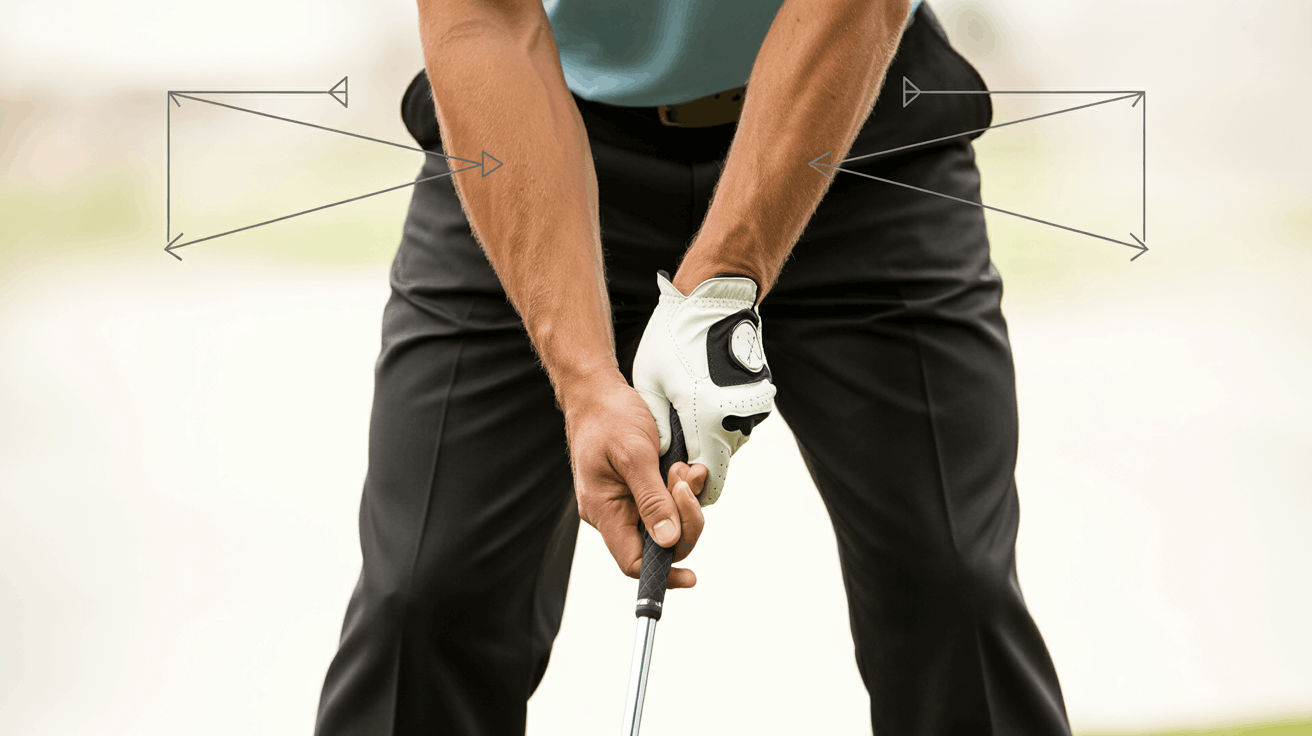
The grip is your only real link to the club, so it's worth getting right from the start. Most beginners do well with the overlapping (Vardon) grip—left hand on top, right hand below, right pinky overlapping the left index finger.
Place your left thumb just right of center on the grip. Your right palm's lifeline should cover your left thumb, with both thumbs pointing down the shaft.
For your stance, set your feet about shoulder-width for mid-irons. Keep your weight balanced on the balls of your feet, knees slightly flexed—not locked, not squatting.
Ball position depends on the club. Center your short irons, move the ball a bit forward for mid-irons, and set it near your left heel for drivers.
Posture and Alignment Basics
Bend from your hips, not your waist, to get good posture. Stand tall, then push your hips back and keep your spine straight. Let your arms hang naturally.
Your spine should tilt just a little away from the target, which happens automatically since your right hand sits lower. Keep your chin up so there's space between it and your chest.
When you line up, your feet, knees, hips, and shoulders should run parallel and point a bit left of your target (for righties). The clubface points right at the target, but your body lines up left.
Many beginners aim their whole body directly at the target, which usually results in a straight shot. Try placing a club along your toes during practice to check your alignment.
Understanding the Golf Swing Arc
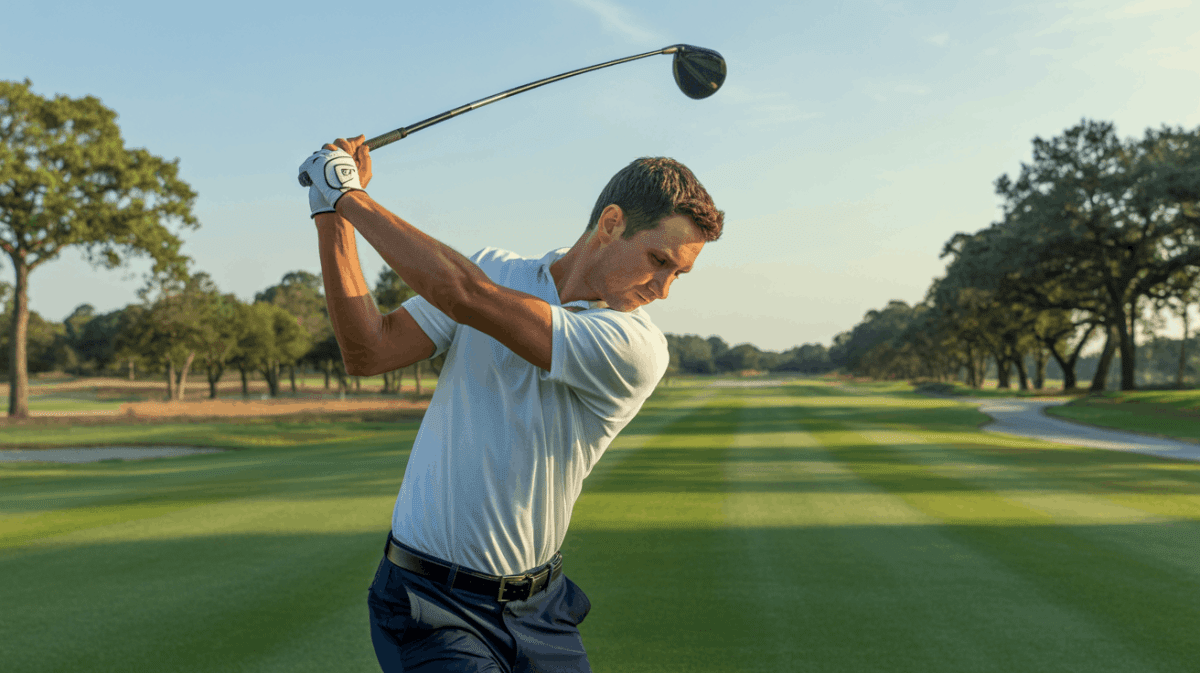
The golf swing moves in a circle around your body. The clubhead goes back, up, around, down, through the ball, and then back up—definitely not a straight line.
During your backswing, move the club away from the ball as your shoulders turn. Keep your left arm pretty straight (for righties) and let your right elbow bend, shifting your weight to your right foot.
On the downswing, shift your weight to your left foot and rotate your hips toward the target. Your arms follow, bringing the club down and through the ball. Try to hit the ball as the clubhead moves downward.
Finish with your chest facing the target, weight mostly on your left foot, and the club high over your left shoulder.
Key Tips for Solid Ball Contact
Solid contact happens when you hit the ball with the club's sweet spot. Keep your head steady throughout the swing. Let it rotate, but don't let it bob or sway much.
Here are the basics for contact:
- Irons: Hit the ball first, then the ground—take a divot
- Driver: Catch the ball on the upswing, no divot
- Fairway woods: Sweep the ball off the turf, little or no divot
Start with half or three-quarter swings to build consistency. It's easier to focus on clean contact when you're not swinging full speed. Once you start hitting it solid, slowly work up to a full swing.
Keep your grip pressure light—maybe a 4 or 5 out of 10. Too much tension kills your swing. Let your wrists hinge naturally; don't force it or keep them stiff.
Navigating the Golf Course

Choosing the right course and understanding its layout will shape your early golf experiences. Let's talk about how to find beginner-friendly courses, what practice areas offer, and the basics of different hole types.
Finding Beginner-Friendly Courses
Start with public courses or municipal facilities. They're usually cheaper and more welcoming to new players. Dress codes and tee-time rules tend to be more relaxed, too.
Executive courses are great for beginners. The holes are shorter, and you can finish a round in two or three hours instead of four or five.
Par-3 courses are another good option. Every hole is short enough to reach the green in one shot, so you get more short game practice and less pressure off the tee.
Look for places that offer beginner clinics or have in-house instructors. These courses know what new players need and usually have a welcoming vibe. You might even find discounted rates during slower times.
Introduction to Practice Facilities
Driving ranges let you hit full shots without keeping score. Try spending a few sessions at the range before you play a real round. Ranges charge by the bucket, usually 40 to 100 balls.
Most places have a putting green where you can practice short putts for free. It's a good way to get used to green speeds and build some confidence. Spend at least 15 minutes putting before you play.
Some courses have chipping areas for practicing short approaches and bunker shots. Not every facility has these, but they're super helpful if you find one.
Practice bunkers are sometimes separate from the main course. Get comfortable with sand shots in practice so you don't panic when you land in a bunker during a round.
Course Layouts and Par Types
Par is the number of strokes a skilled player should need to finish a hole. Standard courses have par-3, par-4, and par-5 holes.
Each type prompts you to think about club selection and shot strategy in different ways.
Par-3 holes measure anywhere from 100 to 250 yards. You’re expected to reach the green with your first shot, then hopefully need two putts.
These holes focus more on accuracy than distance, so they can feel a bit nerve-wracking if you’re just starting out.
Par-4 holes usually range from 251 to 470 yards. The typical plan: hit a tee shot, then an approach shot, and finish with two putts.
Most courses have more par-4s than anything else, so you’ll get very familiar with them.
Par-5 holes stretch beyond 470 yards. You’ll generally need three shots to reach the green, plus two putts to finish.
These longer holes give you a little more breathing room—extra strokes can help you recover if things go sideways.
Most 18-hole courses add up to par-72, but not all do. Nine-hole courses let you play a quicker round and usually land between par-27 and par-36.
Essential Rules and Etiquette for New Golfers
Golf’s got a thick rulebook, but there’s also a bunch of unwritten customs that matter just as much. Learning the basics helps you avoid rookie mistakes and makes the whole experience less intimidating.
Basic Golf Rules to Know
Your main goal? Get the ball from the tee into the hole in as few strokes as possible. Always play the ball where it lands—unless the rules say otherwise, no nudging it to a better spot.
When you tee off, make sure you’re between the tee markers, not in front. If the ball goes out of bounds (white stakes) or into a water hazard (yellow or red stakes), you take a penalty stroke and follow the drop rules for that situation.
Key stroke rules include:
- Count every swing, even whiffs
- Include penalty strokes when you break certain rules
- Play the ball as it lies—no improving your position
- Don’t give or ask for swing advice during your round
If you can’t find your ball within three minutes, call it lost, take a penalty stroke, and hit another ball from where you last played. Bring extra balls—losing a few is just part of the game, especially when you’re new.
On-Course Etiquette and Courtesy
If a group behind you plays faster, let them play through. It keeps the pace up and avoids grumpy looks from strangers.
On the tee box, stay quiet while others hit. Stand off to the side or behind—never directly in their line of sight.
Essential courtesy rules:
- Fix your ball marks on the greens
- Replace divots or fill them with sand
- Rake bunkers after you use them
- Stick to cart paths if signs say so
- Don’t step on someone else’s putting line
Be ready to hit when it’s your turn. Have your club picked out and your ball ready before you step up. The person farthest from the hole goes first, but in casual rounds, “ready golf” is fine—whoever’s ready just hits.
Keep your phone on silent. Only take calls if it’s absolutely necessary.
Understanding Penalties and Scoring
Most penalties add one or two strokes to your score for that hole. You still count them even if you didn’t swing.
A one-stroke penalty covers things like accidentally moving your ball, hitting the wrong ball, or grounding your club in a hazard. A two-stroke penalty happens if you hit a practice shot during a hole or ask another player what club to use.
Scoring looks like this:
- Normal swing that moves the ball = 1 stroke
- Out of bounds or lost ball = 1 penalty stroke plus distance (hit again from where you last played)
- Unplayable lie = 1 penalty stroke, then drop according to the rules
- Water hazard = 1 penalty stroke, then drop based on hazard color
Write down your total strokes for each hole, including penalties. Par is the expected number of strokes for a hole. If it takes more, you’re “over par.” Most beginners shoot well over par at first, and honestly, that’s just part of learning.
Practice Routines for Fast Improvement
Smart practice is what separates golfers who get better from those who stay stuck. Working on specific skills with a plan beats just smacking balls any day.
Effective Driving Range Habits
Start your range session by warming up with wedges. Hit 10–15 easy shots to loosen up before grabbing longer clubs.
Select a target for each shot, or use alignment sticks. This makes you focus on accuracy, not just hitting the ball. Too many beginners waste time hitting balls without aiming.
Spend about 60% of your practice time on shots inside 100 yards. Short game work helps you score faster than just blasting drives. Work through your bag: hit 5–8 shots with one club, then switch.
Set small goals for each session—like trying to land 7 out of 10 pitching wedge shots in a 20-yard circle. Jot down what you practiced so you can see progress (or not) over time.
Short Game Drills for Beginners
The short game covers chipping, pitching, and bunker shots. Spend at least 20 minutes a session here—it’s where most of your strokes actually come from.
Try the ladder drill for chipping. Put markers at 10, 20, and 30 feet. Try to land five shots between each marker. It’ll help you get a feel for different swing lengths.
For pitching, use the clock drill. Imagine your lead arm as a clock hand—backswing to 9 o’clock, follow-through to 3 o’clock. This helps with contact and distance control.
If your course has a practice bunker, use it. Aim to hit the sand about 2 inches behind the ball—not the ball itself. It feels weird at first, but it works.
Building Confidence on the Green
Putting makes up around 40% of your score, so don’t skip it.
The gate drill is great for your stroke path. Place two tees just wider than your putter head, about 6 inches in front of your ball. Rolls putts through the gate without hitting the tees. It’s harder than it sounds, but it really helps.
Work on distance control before you worry about sinking long putts. Try to get putts from 10, 20, and 30 feet to stop within 3 feet of the hole. Speed matters more than perfect aim, especially early on.
Practice short putts from 3 feet. Try to make 10 in a row before you leave. If you miss, start over. It’s frustrating, but it builds confidence under pressure.
Common Mistakes and How to Avoid Them
New golfers fall into the same traps: bad swing habits, nerves, and buying the wrong gear. These issues slow you down and can make golf less fun than it should be.
Beginner Swing Errors
The most common swing mistake? Gripping the club way too tightly. If your knuckles turn white, you’re overdoing it. Hold the club like you’d hold a tube of toothpaste—firm enough, but not so hard you squeeze any out.
Posture is another biggie. Beginners often stand too straight or hunch over. Tilt your spine forward from your hips by about 30 degrees and keep a slight bend in your knees. Let your arms hang naturally.
Trying to hit the ball as hard as possible? It’s tempting, but a smooth, controlled swing is more effective. Focus on solid contact. Power comes with time and better mechanics.
Many beginners lift their heads early to see where the ball went. Try to keep your eyes down through impact. Your head will follow on its own after you hit the ball.
Overcoming Nerves and Intimidation
Standing on the first tee with people watching can feel brutal. Just remember—every golfer started as a beginner. Most people respect anyone willing to learn.
Try playing during off-peak hours when the course is quieter. Early weekday mornings are usually less crowded. It’s less stressful and gives you space to resolve issues.
Don’t apologize after every bad shot. Just keep moving and play at a good pace. If a faster group shows up behind you, wave them through. It takes the pressure off everyone.
Practice the basics at the range before you play a full round. Confidence grows when you know you can at least hit the ball most of the time. You don’t need perfect shots—just get it moving.
Equipment Pitfalls for First-Timers
Buying expensive new clubs right away? Not necessary. Your swing will change a ton in your first year. Start with a basic used set or a cheap boxed set for beginners.
What You Actually Need:
- Driver
- 5-wood or hybrid
- Irons (6-9 and pitching wedge)
- Putter
- Golf bag
- One dozen balls
Skip specialty wedges, long irons, and extra woods for now. They’re trickier to use and just add confusion. Keep it simple and focus on learning the basics.
Getting fitted for clubs before you have a consistent swing doesn’t make sense. Wait until you’ve had a few lessons and can repeat your swing. Then, custom fitting actually helps.
Frequently Asked Questions
New golfers always have questions about gear, rules, practice, and where to play. Getting these basics down builds a little confidence before your first round.
What basic equipment is essential for a beginner golfer to start playing?
Start with a basic set: driver, fairway wood, irons (usually 5-9), pitching wedge, sand wedge, and putter. You can get a full beginner set for $200–400, which covers everything you need.
You’ll need golf balls—just buy cheap ones at first, since you’ll lose a bunch. A golf glove helps with grip and saves your hand from blisters.
Golf shoes with soft spikes add traction, but regular athletic shoes work for practice. On the course, though, proper golf shoes do help.
Don’t forget a golf bag, some tees, a towel, ball markers, and a divot repair tool. You’ll feel more prepared with the basics in your bag.
What are the fundamental rules that a beginner golfer should learn?
The basic goal is simple: get your ball from tee to hole in as few strokes as possible. Each hole has a par, which is the number of strokes a skilled golfer should need.
Play your ball where it lands, unless the rules say otherwise. If you go out of bounds or into water, add a penalty stroke and follow the right drop procedure.
Count every stroke, including accidental hits during practice swings. Stay quiet and out of the way when others are hitting.
The player farthest from the hole hits first. Play at a steady pace, and if you’re slow, let faster groups play through. That’s just good golf karma.
How can a beginner practice golf effectively at home?
Try practicing your putting on carpet or a putting mat. Just ten or fifteen minutes a day can really help build feel and accuracy, even if it doesn't seem like much at first.
Chipping in your yard sharpens your short game, as long as you've got a bit of space. Toss down a few targets at different distances and see if you can land the ball softly—it's trickier than it looks.
Stand in front of a mirror and work on your grip and setup position. It might feel awkward, but memorizing your form without hitting balls pays off later.
Grab a club and try some slow swing drills in your living room or garage. Just make sure you've cleared the area (no one wants a busted lamp), or use a practice club if you're worried.
Mix in some flexibility and core exercises—think stretches, planks, maybe a few twists. It all helps your rotation and adds a little more pop to your swing, even if you don't notice it right away.
What are some effective techniques for mastering the golf swing as a beginner?
Start by working on your grip so your hands act together, not against each other. Let the club sit in your fingers, not buried in your palms—it makes a difference.
Set your feet shoulder-width apart, knees slightly bent, weight balanced on the balls of your feet. Ball position varies by club, so adjust until it feels right.
When you take the club back, rotate your shoulders and try to keep your lower body steady. A smooth backswing beats a rushed one every time, even if it feels slow.
Kick off your downswing by turning your hips toward the target, then let your arms follow. That sequence is where the real power and accuracy come from, though it takes time to refine.
Keep your head mostly still and your eyes locked on the ball. A full follow-through helps you make solid contact and sends the ball where you want it—well, hopefully.
If you're just starting out, use wedges for shorter swings first. Mastering the basics with these clubs makes the transition to longer clubs much less intimidating.
Can you recommend beginner-friendly golf courses or facilities for new players?
Check out executive or par-3 courses nearby if you're just getting started. They're shorter, so you can finish a round in a couple of hours and not feel totally wiped out.
Municipal courses are a solid option for beginners and typically cost less than private clubs. You might even find group lessons or practice facilities for a reasonable price.
Look for golf spots with driving ranges, chipping greens, and putting greens. It's nice to have a place to work on your game before you jump into a full round.
Give them a call and ask about twilight rates or beginner-friendly tee times. Some courses reserve certain times for new players or offer lower prices in the late afternoon, which is a nice bonus.
Local golf shops and courses usually know which places are most welcoming to beginners. They'll often steer you toward courses with wide fairways and fewer hazards—making the whole thing much less nerve-wracking.
What are the key differences between practicing at a driving range and playing on an actual course for a beginner?
At a driving range, we hit ball after ball from a flat, perfect lie. Every shot feels the same, and there's no real consequence for a bad swing.
Out on the course, it's a whole different story. Each shot throws something new at us—uneven ground, awkward slopes, and unpredictable lies.
The range provides a place to focus on swing mechanics without real pressure. It’s a space to mess around with different clubs and see what happens, no scoreboard looming over us.
On the course, though, we have to think a lot more. Choosing the right club, shaping shots, and dealing with hazards like bunkers or rough—it all matters.
Weather can throw another curveball, too. The range rarely prepares us for wind or soggy fairways.
There's also the mental side. On the course, the pressure mounts, and we have to manage expectations, recover from bad shots, and stay focused for hours.
DISCAIMER
This document is provided for general information purposes only and should not be relied upon as providing legal advice, technical, or specific operational guidance to the reader, whether as to the practices described in the document or the applicable legal requirements and regulations. Progolfinsider.com expressly disclaims any responsibility for liability arising from or related to the use or misuse of any information in this document.